Skip to content

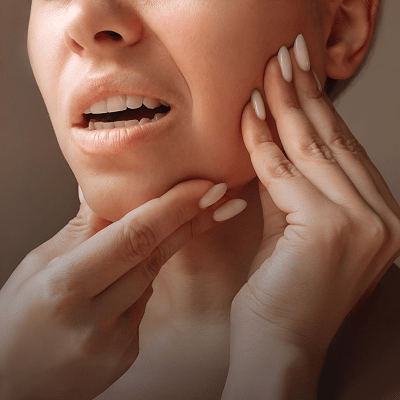
A jaw that clicks, aches, or locks can make eating, talking, and even yawning difficult. Many people live with it for months before they ask for help, and many are unsure whether the problem is their teeth, their muscles, or the joint itself.
This page explains the common signs of a temporomandibular joint (TMJ) disorder, how we assess it, and which treatments come first. We follow a simple rule: start with reversible care, and keep surgery for the rare cases that need it.
Is Your Jaw Pain a TMJ Problem?
| Symptom | What it may mean |
| Clicking or popping when you open or close | The disc inside the joint may move out of position. Clicking without pain is common and often needs no treatment |
| Jaw locking | The jaw may stick open or closed. This needs assessment |
| Pain in front of the ear, in the cheek, or along the jaw | Jaw muscles or the joint may be overworked or inflamed |
| Headaches, especially at the temples | Clenching and muscle tension may contribute |
| Ear fullness or ear pain with a normal ear exam | The joint sits next to the ear, so jaw problems can feel like ear problems |
| Tight, tired jaw on waking | You may clench or grind your teeth at night |
| Worn, flat, or chipped teeth | Long-term grinding may be the cause |
| Difficulty opening wide or chewing | A muscle or joint problem may limit movement |
Get urgent help if your jaw pain comes with chest pain, shortness of breath, sweating, or pain spreading to your arm. Jaw pain can signal a heart problem. Also seek urgent care if you cannot open your mouth after an injury, or if you have a fever and facial swelling.
What Is a TMJ Disorder?
The temporomandibular joints connect your lower jaw to your skull, one on each side, just in front of your ears. They let you chew, speak, and yawn. A temporomandibular disorder (TMD) is a group of problems that affect these joints, the muscles that move them, or both.
Common types include:
- Muscle pain (myofascial pain). The jaw and face muscles ache from overuse or tension.
- Disc problems. The cushion inside the joint slips out of place and causes clicking or locking.
- Joint wear or arthritis. The joint surface changes over time.
A rapid evidence review in American Family Physician notes that TMD affects roughly 5 to 12 percent of people. Causes vary and often overlap. They include injury, clenching or grinding, stress, arthritis, and joint wear. For many people, symptoms are temporary and settle with simple care.
Teeth Grinding and Clenching (Bruxism)
Bruxism means grinding or clenching your teeth. You may do it while asleep or while awake, often without noticing. It is common in people with jaw pain, but the link varies. Not everyone who grinds develops TMD, and not every TMD patient grinds.
Signs of bruxism include:
- A sore or tired jaw in the morning
- Headaches on waking
- Flat or worn teeth
- Sensitive teeth
- A partner who hears grinding at night
A custom night guard can protect your teeth and rest your jaw muscles. See the splint section below.
How We Diagnose TMJ Disorders
Diagnosis rests mainly on your story and a careful examination. The same American Family Physician review explains that imaging such as MRI or CT is for cases where the diagnosis is unclear.
At your assessment, your surgeon will:
- Ask about your symptoms. When did they start? What makes them better or worse? Do you clench or grind? Have you had an injury or dental work?
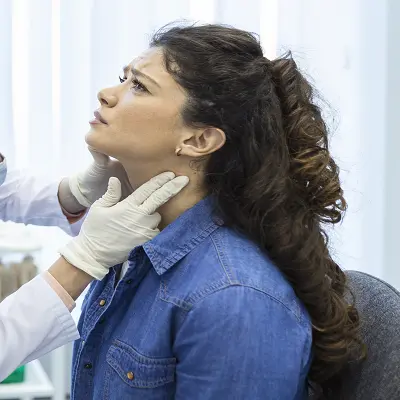
- Examine your jaw. The surgeon feels the jaw muscles and joints, listens for clicks, and watches how your jaw moves.
- Measure how far you can open and check whether your jaw moves smoothly.
- Check your teeth and bite. The surgeon looks for wear, missing teeth, and uneven contact.
- Arrange imaging when needed, such as an X-ray or scan, if the exam suggests joint damage or another cause.
- Explain the diagnosis and your options in plain words.
TMJ Treatment: Start Conservative
The National Academies review of TMD care and the American Dental Association advise against using irreversible treatments, such as bite grinding, braces, or restorations, as the first step. Most jaw joint and muscle problems are temporary and do not get worse. We therefore work from the least invasive option upward.
| Step | Treatment | What to know |
| 1 | Self-care and habit change | Often enough for mild cases |
| 2 | Medication | Short-term, as your doctor advises |
| 3 | Jaw exercises and physiotherapy | Improves movement and eases muscle tension |
| 4 | Splints and night guards | Reversible, and the most widely used appliance treatment |
| 5 | Injections | Used in selected cases. Evidence is mixed |
| 6 | Joint procedures and surgery | Rare. Only for severe problems that do not respond |
Step 1: Self-Care and Habit Change
Soft foods, avoiding gum and wide yawns, jaw rest, heat or cold packs, and stress management help many people. See the self-care list below.
Step 2: Medication
Your doctor may suggest an anti-inflammatory medicine, and a muscle relaxant if muscle spasm is clear. The American Family Physician review recommends naproxen first for TMD and advises against opioids because of the risk of dependence. Always take medicines as your doctor directs, and check for conditions such as stomach problems or pregnancy first.
Step 3: Jaw Exercises and Physiotherapy
Guided stretching and relaxation exercises can improve how far your jaw opens and ease muscle tension. A physiotherapist trained in jaw problems can guide you, and we will tell you if you need one.
Step 4: Splints and Night Guards
A splint is a removable plastic appliance that fits over your teeth. See the next section.
Step 5: Injections
Doctors sometimes use injections into the muscle or joint for pain that does not respond to simpler care. The evidence is mixed. The American Family Physician review found no consistent benefit from joint injections over washing out the joint alone, so we use injections only in selected cases, after discussing the evidence with you.
Step 6: Joint Procedures and Surgery
A small number of patients have a locked joint or joint damage that does not respond to other care. Your surgeon may then discuss a minimally invasive joint wash-out (arthrocentesis) or surgery. These steps are not reversible, and guidelines advise caution. If a clinic recommends surgery, get a second opinion.
Surgery for TMJ disorders differs from jaw alignment surgery, which corrects the position of the jaws.
Teeth-Grinding Splints (Night Guards)
A splint rests your jaw muscles and protects your teeth from grinding wear. A custom mouth guard fits your teeth better than a ready-made one.
| Type | What it does | Notes |
| Stabilization splint (flat, hard) | Spreads biting forces evenly and relaxes the muscles | The most common type for TMD. Reversible |
| Soft night guard | Cushions teeth | Suits mild grinding. May not relax muscles as well |
| Repositioning splint | Holds the jaw in a new position | Not a first-line option. It can change the bite, so use it only on specialist advice |
How we fit a splint:
- We take an impression or scan of your teeth.
- The lab makes the splint fit.
- We check the fit and adjust it.
- You wear it as instructed, usually at night.
- We review how you feel and adjust it at follow-up visits.
A splint does not cure grinding. It protects your teeth and jaw while you work on the causes. You may need a few days to get used to it.
Bite Correction and Occlusal Adjustment
Many people ask whether a “bad bite” causes TMJ pain. Sometimes a bite problem plays a role, but the link is less certain than people think. The National Academies review reports American Dental Association guidance to avoid routinely using irreversible treatments, such as braces, occlusal equilibration (grinding teeth to balance the bite), and restorations, as the first treatment for TMJ disorders.
We therefore consider bite correction only when:
- Your symptoms have settled with reversible care, and a clear bite problem remains
- Your bite changed suddenly after an injury or dental work
- You need orthodontic or restorative treatment anyway, and we can plan it with your jaw in mind
If anyone advises grinding your teeth or changing your bite as the first step, ask why, and get a second opinion.
Who Treats TMJ Disorders at Dental Clinic Islamabad
Dr. Ahsan Rush leads TMJ assessment at our clinic. He is an oral and maxillofacial surgeon with an FCPS in oral and maxillofacial surgery and more than 11 years of experience.
What does “TMJ specialist” mean? Pakistan has no separate registered specialty called “TMJ specialist.” TMJ care draws on oral and maxillofacial surgery, dentistry, and physiotherapy. Ask any clinician about their training in jaw disorders, how they diagnose, and how they decide between treatments.
What to Expect
| Stage | What happens |
| First visit | History, jaw examination, and a clear explanation of what is going on |
| If a splint is needed | Impression or scan, then a fitting visit |
| Follow-up | Review of pain, jaw movement, and splint fit. Your surgeon sets review dates |
| If symptoms continue | We reassess, adjust the plan, or refer you for further tests or other specialists |
Improvement varies. Many mild cases settle with self-care and a splint over weeks to months. Chronic cases need more time, and some need ongoing management.
Self-Care You Can Start Today
- Eat soft foods, and avoid chewy or hard foods.
- Do not chew gum, ice, pens, or nails.
- Keep your lips together and your teeth slightly apart when you rest.
- Avoid wide yawns, and support your jaw with your hand when you yawn.
- Apply a warm, moist cloth to sore muscles for 10 to 15 minutes. Use a cold pack if the area feels inflamed.
- Practice gentle jaw stretches, as your clinician shows you.
- Manage stress with regular breaks, sleep, and relaxation.
- Avoid resting your chin on your hand, and avoid cradling a phone between your shoulder and ear.
Other Causes of Jaw Pain
Not all jaw pain is TMD. See a clinician if you have:
| Problem | Clues |
| Toothache or infection | Pain with hot or cold, swelling, or a sore tooth. |
| Sinus infection | Pressure in the cheeks and a blocked nose |
| Ear infection | Ear pain with fever or discharge |
| Nerve pain (trigeminal neuralgia) | Sudden, sharp, electric-shock pain on one side of the face |
| Heart problems | Jaw pain with chest pain, breathlessness, or sweating. Call for emergency help |
Book a TMJ Assessment
Tell us how long you have had jaw pain, clicking, or locking, and what makes it worse. We will examine your jaw, explain the cause, and set out your options in order, starting with the gentlest.