Skip to content
Tooth loss or the decay of the bone surrounding teeth is a common problem, especially for individuals with gum disease, missing teeth, or a history of long-term dental issues. One of the most frequently asked questions is: Can bone grow back around teeth? The answer is not a simple yes or no, but modern dentistry offers promising solutions. While bone does not regrow on its own, advanced dental procedures can restore lost bone, helping maintain oral health in the long term.
Understand Bone Loss Around the Teeth
The bone around your teeth, known as alveolar bone, plays a crucial role in keeping teeth stable. When this bone weakens or shrinks, teeth may loosen, shift, or even fall out. Common causes of bone loss include:
- Periodontitis (advanced gum disease)
- Not replacing missing teeth
- Chronic inflammation or infection
- Trauma or jaw injuries
- Poor oral hygiene habits
When harmful bacteria attack the gums, they can also damage the underlying bone. Untreated, this leads to pockets around teeth and accelerates bone loss.
Can Bone Grow Back Naturally?
In most cases, the bone surrounding teeth does not regenerate on its own. Unlike skin or soft tissue, bone requires specific biological conditions and stimulation to heal. However, early bone loss may sometimes be slowed or partially reversed with proper dental care. Maintaining excellent oral hygiene and treating gum disease promptly can prevent further deterioration.
Advanced Dental Procedures To Regrow Bone
Modern dentistry offers several treatments designed to regrow bone and support oral health. These procedures work with the bodies natural healing mechanism
-
Bone Grafting
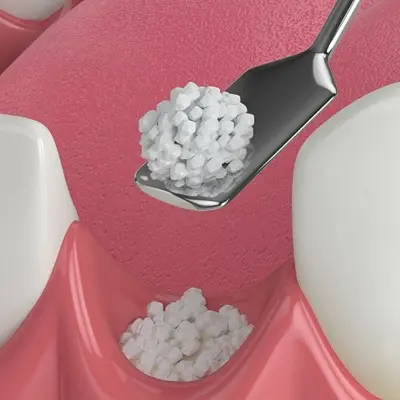
It is the most popular procedure. This is done by a surgeon putting a material (bones) (not necessarily your own, an animal, or a synthetic source) in the lost area. This substance serves as a scaffold, where your body’s bone cells grow into and replace it within some months.
-
Guided Tissue Regeneration (GTR)
GTR involves inserting a biocompatible membrane between the gum and the bone. This barrier prevents fast-growing gum tissue from filling the space, giving slower-growing bone cells time to regenerate and strengthen the area around the tooth.
-
Tissue-Stimulating Proteins
Certain gels, such as Emdogain or Platelet-Rich Plasma (PRP), can stimulate bone and ligament growth. These gels are often derived from the patient’s own blood, encouraging natural tissue regeneration.
-
LANAP Laser Therapy
Laser-Assisted New Attachment Procedure (LANAP) uses a special medical-grade laser to regenerate bone and ligaments on teeth affected by gum disease.
Factors Relevant to Bone Regrowth Failure
A patient does not always have the same outcome. Some things affect the ability of the bone to be restored:
- Severity of bone loss
- Overall oral hygiene
- Smoking habits
- General health conditions like diabetes.
- Follow-up care congruence.
Role of Periodontal Care in Bone Health
Healthy gums are essential for strong bones. Professional periodontal treatments remove harmful bacteria, reduce inflammation, and create a healthier environment for the bone to thrive. Procedures like scaling and root planing, combined with ongoing maintenance, protect both gums and the underlying bone.
Ahsan Rush, Best in Cosmetic and Operative Dentistry
Dr. Ahsan Rush is a leading Oral and Maxillofacial Surgeon in Islamabad, renowned for his expertise in advanced dental and jaw surgeries. He specializes in procedures that restore oral function, improve aesthetics, and ensure long-term dental health. His key treatments include jaw surgery, TMJ (temporomandibular joint) treatment, wisdom tooth extraction, surgical extractions, and bone grafting.
With a patient-centered approach, Dr. Ahsan Rush combines modern diagnostic technology with precise surgical techniques to deliver safe, effective, and lasting results. Whether it is complex jaw correction or routine wisdom tooth removal, he ensures every treatment is tailored to individual needs, helping patients regain confidence, comfort, and a healthy smile.
Protect Your Bones Around Your Teeth
It is equally important to prevent additional loss of bone rather than repair the lost bone. Major changes can be made by simple daily habits. Significant preventive measures involve:
- Bruising twice a day with an effective technique.
- Flossing of teeth daily to clean the plaque.
- Professional cleanings now and then.
- Early care of gum inflammatory conditions.
- Early replacement of lost teeth.
Final Thoughts on Tooth Bone Regrowth!
Although bone does not usually regrow on its own, modern dentistry provides effective ways to restore lost bone around teeth. With professional care, accurate diagnosis, and consistent maintenance, patients can preserve their oral health and maintain strong, stable teeth for years to come.