Skip to content
If your dentist has recommended a dental crown, you might be wondering, “Is this procedure safe, or are there risks involved?” It is a smart question to ask about any dental treatment.
The simple answer is that getting a dental crown is an extremely safe and routine procedure with a long history of success. However, like any medical treatment, it’s important to understand the process and the very minimal risks involved. Lets break it down in simple terms.
What is a Dental Crown?
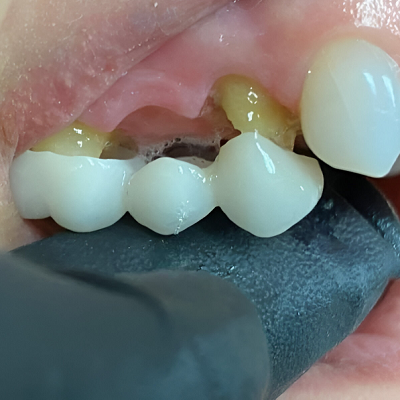
Think of a crown as a strong, custom-made “cap” that fits perfectly over a damaged, weak, or misshapen tooth. It restores the tooth’s shape, size, strength, and appearance. Crowns are used to:
- Protect a weak tooth from breaking
- Restore a broken or severely worn tooth
- Cover and support a tooth with a large filling
- Hold a dental bridge in place
- Cover a dental implant or a tooth after a root canal
Why Getting a Crown is Generally Very Safe
Dental crowning is a standard, predictable procedure for several reasons:
- Non-Invasive: It does not involve surgery deep in the gums or jaw (unless paired with an implant).
- Preservative: The goal is to save your natural tooth structure, not remove it.
- Long Track Record: Dentists have been placing crowns successfully for decades.
- High Success Rate: With proper care, crowns can last 10-15 years or longer.
The Step-by-Step Safe Process at Our Clinic
Understanding the process shows how safety is built into every step:
- Consultation & X-rays: We examine the tooth and take X-rays to check the roots and bone health. We only proceed if it’s the right solution.
- Tooth Preparation: The tooth is gently reshaped to make room for the crown. You are completely numb during this.
- Impressions/Scan: We take a precise digital scan or mold of your tooth to design a crown that fits perfectly.
- Temporary Crown: A temporary crown protects your tooth while the lab makes your permanent one.
- Permanent Crown Placement: When your custom crown is ready, we check the fit, bite, and color, then cement it permanently in place.
Potential Risks and How We Minimize Them
While major complications are rare, being informed is key. Here are potential risks and how we prevent them:
| Potential Risk | How It’s Minimized |
| Tooth Sensitivity | Common but temporary. We ensure a proper fit and seal to minimize it. |
| Chipped Crown | We use high-quality, durable materials (porcelain-fused-to-metal, zirconia). |
| Loose Crown | Precision fitting and strong, modern dental cement prevent this. |
| Allergic Reaction | Rare. We discuss material options (e.g., all-ceramic vs. metal-based). |
| Nerve Damage/Infection | Very rare. X-rays ensure we don’t encroach on the tooth’s nerve. Sterile techniques prevent infection. |
| Gum Irritation | A properly fitted crown should not irritate gums. We ensure smooth edges. |
Before and After:
| Before the Crown | After the Crown is Placed |
| Toothache, sensitivity, or pain | Pain is resolved, tooth is protected |
| Difficulty chewing due to a cracked or weak tooth | Full chewing function is restored |
| Embarrassment over a discolored or misshapen tooth | A natural, beautiful smile is achieved |
| Risk of the tooth breaking further | The tooth is strengthened and sealed |
What You CAN Do for a Safe & Successful Outcome
- Choose a Reputable Clinic: Skilled dentists and quality labs are crucial.
- Discuss Material Options: Talk to your dentist about the best crown material (e.g., zirconia for strength, porcelain for aesthetics) for your specific tooth.
- Maintain Excellent Oral Hygiene: Brush, floss, and use an antiseptic mouthwash. Crowns can’t get cavities, but decay can start at the gumline where the crown meets the tooth.
- Get Regular Check-ups: See your dentist every 6 months to ensure the crown and surrounding tooth are healthy.
- Avoid Bad Habits: Don’t chew ice, hard candy, or use your teeth as tools to avoid chipping the crown.
What You Should NOT Do
- Don’t Ignore Problems: If the crown feels loose, you feel pain, or your bite feels “off,” contact us immediately.
- Don’t Neglect the Gumline: Plaque buildup at the crown margin is the main cause of future problems.
- Don’t Grind Your Teeth Unchecked: If you have bruxism (teeth grinding), tell your dentist. You may need a night guard to protect your crown and other teeth.
Cost of Dental crown in Islamabad
Our pricing is transparent and based on the complexity of the case.
| Procedure | Cost (PKR) |
| Dental Crown | 20,000 for procline |
Factors Affecting the Cost
- Dental crown material
- Technique/Technology Used
- Clinics location and technology available.
Book a consultation for an accurate diagnosis and personalized cost.
Why Choose Us for a Dental Crown?
- Expert: Specialists like Dr. Usama Hayat with advanced training
- Pain-Free Promise: We ensure complete comfort during treatment
- Advanced Technology: Digital imaging and Certified tools for precision
- High Success Rate: Our treatments are designed to save your tooth long-term
- Safe & Hygienic: Sterile environment with top-grade infection control
So, is getting a dental crown safe or risky? The evidence is clear: it is a very safe, low-risk, and highly effective dental procedure. At Dental Clinic Islamabad, we prioritize your safety at every step. A crown is a reliable investment in saving your tooth and maintaining a healthy, functional smile for years to come.
FAQs
Can my body reject a dental crown?
No, A crown is not an organ; it is a prosthetic device. There is no biological "rejection." Allergic reactions to materials are extremely rare.
How long does a crown last?
With good care, 10-15 years on average, but many last much longer.
Will a crown look fake?
No, Modern crowns, especially all-ceramic or zirconia, are meticulously color-matched to blend seamlessly with your natural teeth.
Can a crowned tooth get a cavity?
The crown itself cannot decay, but the tooth underneath at the gumline can. That's why hygiene is critical.
What if I have an allergy to metals?
We offer metal-free options like all-porcelain or zirconia crowns.
Is there an alternative to a crown?
Sometimes a large filling or inlay/onlay may work, but for significantly damaged teeth, a crown is often the strongest option.
What is the failure rate of dental crowns?
It is very low. Most "failures" are due to decay at the margin years later or physical damage, not the crown itself failing.
Does getting a crown weaken my tooth?
The preparation removes some tooth structure, but the crown then surrounds and strengthens what remains, making it stronger than it was in its damaged state.
Is it safe to get an MRI with a dental crown?
Yes, Most modern crown materials are non-ferrous (not magnetic) and perfectly safe for MRI scans. Always inform the radiologist about any dental work.