Skip to content
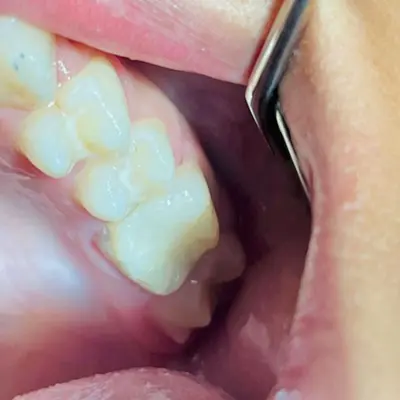
The modern concept of a filling is to remove decay and seal the tooth. But many patients afterwards ask an unsettling question after they visit the dentist: Can a dental filling cause an infection? At Dental Clinic Islamabad, the majority of patients enjoy seamless results under the capable expertise of professionals. But knowing the risks of potential “post-operative complications” is crucial for maintaining lifelong oral health.
How a Filling and an Infection Are Related?
Lets first examine what is going on inside the tooth to determine whether or not a filling can “cause” an infection. A cavity is an infection of bacteria that enters the structure of the tooth. If the dentist has to fill a hole in the tooth, part of the tooth with the decay is removed, and the hole is filled.
But the question is, can a dental filling cause an infection? generally comes into mind in 3 situations:
- Deep Decay: If the hole was deep, there could have been bacteria present in the “pulp” (the nerve) before the filling was put in. The hidden bacteria can grow and cause an abscess even if the tooth is sealed.
- Old Cracked Fillings: If it is an old filling that has cracked or does not fit the tooth tightly, small spaces will allow leftover bacteria to creep under the filling. This is referred to as recurrent decay.
- Vibration or Heat of the Dental Drill during the Treatment: During the treatment, sometimes the vibration or heat of the dental drill can irritate the nerve. This typically results in a temporary sensitivity, but in rare cases, it may not be able to recover, and an internal infection may result.
Identifying the Red Flags
A few days after a dental appointment, it is normal to be sensitive to temperature. But when it’s an actual infection, it’s a different story. When your pain is treated by an expert such as Dr Usama Hayat Ghauri, he or she will probably warn you about “throbbing” pain.
Some of the common symptoms are:
- A sharp or dull ache that doesn’t go away after a week.
- Any bulging of the gums around the tooth or swelling of the cheek.
- If this is the case, a “pimple” on the gum is likely draining pus (abscess).
- A general symptom indicating that your body is resisting the attack of a bacterial infection.
Normal Healing vs. Medical Concern
| Condition | Primary Symptom | Clinical Cause | Action Required |
| Reversible Pulpitis | Sharp, brief pain to cold | Minor irritation from the drill | Monitor; usually heals in 1 to 2 weeks |
| Irreversible Pulpitis | Lingering pain in the heart | Bacteria reached the nerve | Requires a Root Canal or replacement |
| Occlusal Trauma | Pain only when biting | The filling is “too high.” | Simple adjustment by the dentist |
| Dental Abscess | Constant throbbing & swelling | Bacterial infection in the bone | Emergency: See a dentist immediately |
How Does Professional Care Prevent Treatment Complications?
A frequent question is whether the dentist was the cause of the infection. In dental medicine, it is common to consider the iatrogenic factors, that is, how the treatment was executed. Professional standards include the use of high magnification and special liners, such as those Dr Usama Hayat Ghauri would use.
They are liners between the filling and the nerve. They offer a chemical barrier to the growth of bacteria and stimulate the development of reparative dentin. These layers help prevent the risk of a dental filling causing an infection.
How to Protect Your Restoration?
Follow these medical rules to make sure that your filling won’t be a source of infection:
- High or off-bite, see your dentist. When the bite is uneven, it results in inflammation, which appears as if a person is infected.
- Bacteria gather at the fillings margins (edges) at night. Gum disease, commonly referred to as ‘recurrent decay’, cannot be avoided unless you floss.
- You cannot detect if an infection is developing under an old filling until it becomes painful, so annual X-rays are the only way to catch this type of infection.
Final Words!
So, can a dental filling cause an infection? Although uncommon, it can occur if the nerve has been damaged before the seal or if the seal has failed over time. The safest protection is to have a clinical team that insists on precision and employs the most modern bonding treatments to seal bacteria out. Worried about tooth pain? Can a dental filling cause an infection? Discover clinical insights from Dental Clinic Islamabad, to protect your smile today.