Skip to content
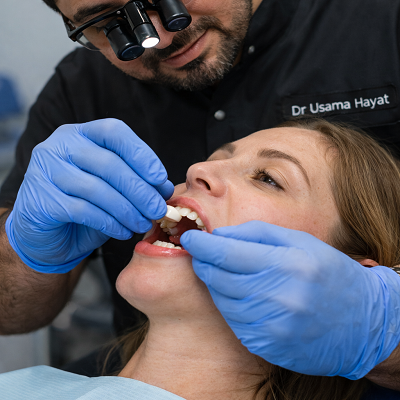
Dental crowns in Islamabad are a reliable and common dental restoration used to cover damaged or weakened teeth. But what happens if your gums don’t respond well? At Dental Clinic Islamabad, our experienced dental specialists; Dr Usama Hayat explain whether a dental crown can truly be rejected by your gum tissue and what signs to watch for to ensure your crown remains healthy, functional, and comfortable for years to come.
QUICK FACTS
- Typical Lifespan: 10-15+ years with proper care
- Procedure Time: 2 visits over 1-2 weeks
- Anesthesia: Local anesthesia for comfort
- Recovery: Minimal to none
- Success Rate: Over 95% with good oral hygiene
- Rejection Risk: Very low with proper fit and care
- Best For: Restoring broken, decayed, or root-canal-treated teeth
What are dental crowns made of?
Dental crowns are custom-made caps that fit over your natural tooth. They can be made from:
- Porcelain or Ceramic: Natural-looking, metal-free, and tooth-colored.
- Zirconia: Strong, durable, and highly aesthetic.
- Porcelain-Fused-to-Metal (PFM): Strong metal base with a porcelain exterior.
- Gold Alloy: Extremely durable but less aesthetic.
Factors that affect crown success and gum health:
- Fit and Precision: A poorly fitted crown can trap bacteria and irritate gums.
- Oral Hygiene: Inadequate brushing and flossing can lead to gum inflammation.
- Material Compatibility: Rare allergic reactions to metals in some crowns.
- Gum Health Before Treatment: Pre-existing gum disease (periodontitis) increases risks.
- Skill of the Dentist: Precision in preparation and placement is key.
- Post-Procedure Care: Following aftercare instructions ensures healing.
How to care for your dental crown and gums?
Step 1: Daily Hygiene
Brush twice a day gently with a soft-brush. Floss carefully around the crown.
Step 2: Regular Check-ups
Visit your dentist every 6 months for cleaning and crown inspection.
Step 3: Avoid Harmful Habits
Do not chew ice, hard candy, or use your teeth as tools.
Step 4: Use Recommended Products
Use non-abrasive toothpaste and antimicrobial mouthwash if advised.
Benefits of crown surgery at Dental Clinic Islamabad:
- Shields weak teeth from further damage.
- Matches the color and shape of your natural teeth.
- Made from strong, clinically tested materials.
- Restores chewing and speaking ability.
- With care, lasts over a decade.
- Biocompatible materials minimize reaction risks.
- Seals the tooth from bacteria.
How to extend your crown’s life?
| DO: | DON’T: |
|
|
Dental Crowns vs Dental Fillings:
| Aspect: | Dental Crown: | Dental Filling: |
| Coverage | Covers the entire tooth | Fills only the cavity |
| Strength | High; protects weakened teeth | Moderate; for smaller decay |
| Longevity | 10-15+ years | 5-10 years |
| Cost | Higher | Lower |
| Best For | Large decay, cracks, and root canals | Small to medium cavities |
Cost of dental crowns in Islamabad:
At Dental Clinic Islamabad, we offer clear pricing for high-quality crowns.
| Crown Type | Price Range |
| All-Ceramic / Porcelain | 20,000 |
| Zirconia Crown | 30,000 |
Factors that affect the cost:
- Material: Zirconia and all-ceramic materials are more expensive than PFM.
- Tooth Location: Molars may require stronger materials.
- Lab Quality: Premium dental labs charge more for custom shading and fit.
- Additional Treatments: Need for root canal, buildup, or gum treatment before crown.
Why choose Dental Clinic Islamabad for Dental crowns?
- Our specialist, Dr. Usama Hayat, ensures a precise fit and gum health.
- We use only FDA-approved, medical-grade crowns.
- For an accurate, comfortable fitting.
- We evaluate and treat gums before crown placement.
- Crowns that look and feel like your own teeth.
- Instructions to maintain crown and gum health.
- We monitor your crown at regular check-ups.
FAQs
What are the signs my crown is failing?
Pain, swelling, gum recession, looseness, or visible damage to the crown.
How long does a crown last?
With good care, 10-15 years or longer.
Can a crowned tooth get infected?
Yes, if decay develops at the crown's edge or from an untreated root canal.
Is the procedure painful?
No, local anesthesia is used. Mild sensitivity after is normal.
Can I whiten a dental crown?
No, crowns do not whiten. Whitening is done before crown shade selection.
What if I am allergic to the crown material?
We use hypoallergenic materials like zirconia or all-ceramic for metal-free options.
How is a crown placed?
The tooth is prepared, impressions taken, a temporary crown placed, and a permanent crown cemented at the second visit.
Can a loose crown be fixed?
Often, yes, if the tooth underneath is healthy. It may need recementing or replacement.
Do crowns require special care?
Just good oral hygiene and regular dental visits.