Skip to content
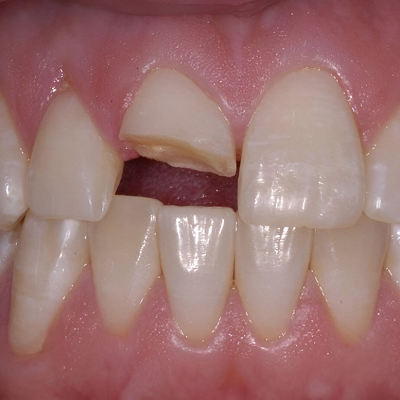
When you discover a cracked tooth, it is normal to panic and wonder, “Will I lose this tooth?” Fortunately, the answer is often no. Thanks to modern dentistry, most cracked teeth can be treated and saved especially when addressed early.
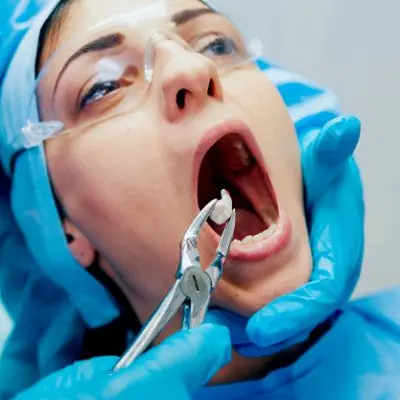
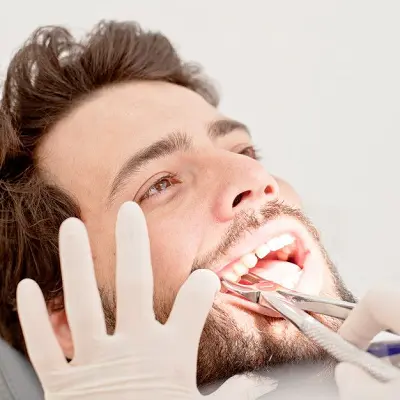
Importantly, tooth extraction is usually the last option, not the first. Dentists today use advanced techniques to repair, protect, and preserve cracked teeth whenever possible. In this guide, you’ll learn about the different types of tooth cracks, how dentists diagnose them, available treatment options, and the situations where extraction becomes unavoidable.
What are the different types of tooth cracks?
Not all tooth cracks are the same. The location and depth of the crack determine both the severity and the treatment approach. Lets break them down in simple terms:
- Craze Lines: Craze lines are tiny, shallow cracks limited to the outer enamel. They look like fine hairline marks and are very common in adults. Since they cause no pain or damage, they usually require no treatment.
- Fractured Cusp: A fractured cusp occurs when a pointed chewing surface breaks off, often around an old filling. While this may sound serious, dentists can usually fix it easily with a new filling or a dental crown.
- Cracked Tooth: This type of crack starts on the chewing surface and extends downward toward the root but does not fully split the tooth. You may feel pain when biting or releasing pressure. In many cases, dentists can save the tooth with a dental crown, sometimes combined with a root canal.
- Split Tooth: A split tooth develops when a cracked tooth goes untreated and eventually splits into two separate pieces. Unfortunately, a split tooth usually cannot be saved and often requires extraction.
- Vertical Root Fracture: A vertical root fracture begins in the root and moves upward. Although it may not be visible, it often causes gum pain or repeated infection. In most cases, this type of crack means the tooth must be removed.
How does a dentist decide whether to extract or save the teeth?
The dentist uses these tools to decide:
- The Bite Test: You will bite on a special stick. Pain on release often means a crack.
- X-Rays: These show the tooth roots and bone. Some cracks don’t show up on normal X-rays.
- Dye Test: A special blue dye can be put on the tooth to make the crack line visible.
When does the dentist go for an extraction?
If the tooth is pulled, you should plan to replace it with an implant, bridge, or partial denture to keep your other teeth from shifting. Sometimes, saving the tooth is too risky or impossible. The tooth will likely be pulled if:
- The crack goes below the gum line into the root bone.
- The tooth is split into separate pieces.
- There is a vertical root fracture.
- The tooth is also very decayed and weak.
How does the dentist save the tooth?
If the tooth can be saved, here are the common fixes:
Filling or dental bonding:
A filling or dental bonding can repair a small crack or chipped cusp.
Dental crown:
A dental crown is the standard treatment, its more like a cap. It wraps around the whole tooth and holds it together like a cast holds a broken bone. If the crack is close to the news a root canal might be needed first.
Root canal:
The dentist does the root canal to remove the nerves, then places a post inside the tooth. This post gives strength to the tooth and finally covers it with a crown.
Cost of cracked teeth treatment in Islamabad:
Here is the price chart of the different treatments of cracked teeth present in Islamabad:
| Treatment Type | Estimated Cost (PKR) | Purpose |
| Dental Filling | 8000 per tooth | Fix a small chip/crack |
| Root Canal Therapy | 8000 per tooth | Remove the infected nerve |
| Dental Crown | 20,000 for procline | Cover and protect the tooth |
| Tooth Extraction | 20,000 per tooth | Remove hopeless tooth |
| Dental Implant | 100k starting. | Replace the extracted tooth |
What affects the price?
- Tooth Location: Back teeth (molars) are harder to treat than front teeth.
- Crown Material: A metal-free, natural-looking crown costs more.
- Clinic Level: A modern clinic with 3D scanning and a dental lab charges more.
Why choose the Dental Clinic Islamabad for cracked teeth?
Here is why Dental Clinic Islamabad is the best dental clinic in Islamabad:
- Our first goal is always to save your natural tooth if we can do it safely.
- We use digital X-rays to see cracks clearly and plan the best treatment.
- We have general dentists, root canal specialists, and surgeons. You get the right expert without going to different clinics.
- We will show you the crack on the X-ray or photo and explain your options in simple words so you can decide.
- From saving the tooth to replacing it if needed, we can manage your full treatment plan.
FAQs
Can a cracked tooth heal on its own?
No. Unlike a bone, a tooth cannot heal a crack by itself. It needs professional dental treatment for healing.
Why does a cracked tooth hurt sometimes and not others?
The crack can open and close when you bite, irritating the nerve inside. You might feel a sharp pain when you bite down and then release.
Is a crown always necessary after a root canal for a crack?
Almost always, yes. The tooth becomes brittle after a root canal. A crown is needed to protect it from splitting.
How can I prevent cracking a tooth?
Do not chew ice, hard candy, or popcorn kernels. Don't use your teeth as tools to open things. If you grind your teeth at night, ask your dentist about a nightguard.
Can a cracked tooth heal on its own?
No. Unlike a bone, a tooth cannot heal a crack by itself. It needs professional dental treatment for healing.
Why does a cracked tooth hurt sometimes and not others?
The crack can open and close when you bite, irritating the nerve inside. You might feel a sharp pain when you bite down and then release.
Is a crown always necessary after a root canal for a crack?
Almost always, yes. The tooth becomes brittle after a root canal. A crown is needed to protect it from splitting.
How can I prevent cracking a tooth?
Do not chew ice, hard candy, or popcorn kernels. Don't use your teeth as tools to open things. If you grind your teeth at night, ask your dentist about a nightguard.