Skip to content
You have a cracked tooth, and your dentist recommends a root canal. A cracked tooth is different from a decayed tooth. The crack can extend down into the root. Bacteria can travel through the crack and cause an infection that a root canal cannot fix. Many patients waste time and money on root canals that ultimately fail because the crack was too deep.
Understanding how cracks affect root canal success helps you make better decisions. Some cracks can be treated successfully. Others require extraction. Dr. Usama Hayat Ghauri at Dental Clinic Islamabad can evaluate your tooth and recommend the best approach.
Understanding Different Types of Tooth Cracks
Not all cracks are the same. Some cracks are harmless while others are disastrous for tooth survival.
Craze lines are tiny cracks that affect only the outer enamel. They are very common and cause no pain. They do not affect root canal success at all.
Fractured cusp is a crack around a dental filling. The crack does not extend into the root. These teeth have a very good prognosis with a crown.
Cracked tooth syndrome involves a crack that extends from the chewing surface toward the root. The crack may or may not reach the root canal. These teeth can often be saved with a root canal and crown.
Split tooth occurs when the crack completely separates the tooth into two distinct segments. The prognosis is poor, and the tooth usually needs extraction.
Vertical root fracture is the worst type. The crack starts at the root tip and extends upward. These teeth cannot be saved and must be extracted.
How a Crack Affects Root Canal Success
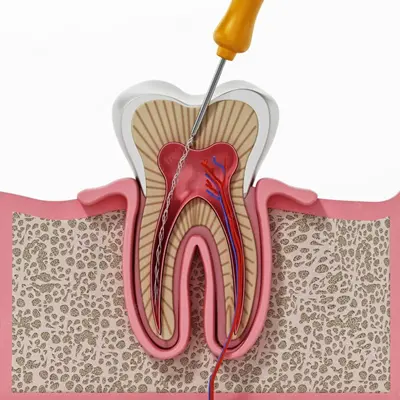
A root canal cleans and seals the inside of your tooth. It removes the infected pulp and fills the space with a biocompatible material.
If the tooth has a crack that extends into the root, the root canal filling cannot seal the crack. Bacteria can travel through the crack and cause a new infection. This is why cracked teeth have lower success rates with root canals.
The success of a root canal on a cracked tooth depends entirely on where the crack ends. A crack that remains above the gum line generally has a good prognosis. When the crack extends below the gum line, the prognosis becomes poor. However, once it reaches the root tip, the tooth can no longer be saved.
How Dentists Diagnose a Cracked Tooth
- Diagnosing a cracked tooth can be difficult. Cracks are often not visible on X-rays. Your dentist will use other methods to find the crack.
- You may feel pain when you bite down and release. The pain is sharp and brief. This is a classic sign of a cracked tooth.
- Your dentist may use a special instrument to test each cusp of your tooth. They may also use a bite stick to apply pressure in specific areas.
- A dental dye may be used to make the crack visible. Transillumination involves shining a bright light through the tooth. The crack will block the light.
Treatment Options for Cracked Teeth
If the crack is small and does not extend to the root, a root canal and crown can save the tooth. The crown holds the tooth together and prevents the crack from spreading.
If the crack is larger but still above the gum line, a root canal followed by a crown may still work. However, the success rate is lower.
If the crack extends below the gum line, the tooth usually needs extraction. In some cases, a surgical procedure called root amputation can remove one root while saving the rest of the tooth. This is only possible for molars with multiple roots.
If the crack is vertical and extends to the root tip, extraction is the only option. The tooth cannot be saved.
What Happens If You Ignore a Cracked Tooth?
Ignoring a cracked tooth is dangerous. The crack can spread over time. Bacteria can enter the crack and cause a deep infection. The infection can spread to your jaw and even into your bloodstream.
You may develop an abscess, which is a pocket of pus at the root tip. The pain can become severe. You may develop a fever and feel generally unwell.
By the time you seek treatment, the tooth may no longer be savable. It will need extraction. Treating a cracked tooth early gives you the best chance of saving it.
How a Crown Helps After a Root Canal
After a root canal, the tooth becomes brittle. It is more likely to crack or break. A crown covers the entire tooth and holds it together.
For a tooth that is already cracked, a crown is even more important. The crown acts like a protective helmet. It prevents the crack from spreading and keeps the tooth intact.
Cost of Root Canal and Crown in Islamabad
| Treatment | Price Range (PKR) |
| Root Canal | 20,000 for procline |
| Dental Crown | 20,000 per tooth |
Best Dentist for Cracked Tooth Treatment in Islamabad
- Dr. Usama Hayat Ghauri at Dental Clinic Islamabad has extensive experience in treating cracked teeth.
- He will evaluate your tooth carefully and recommend the best treatment.
- He will not recommend a root canal if the tooth cannot be saved.