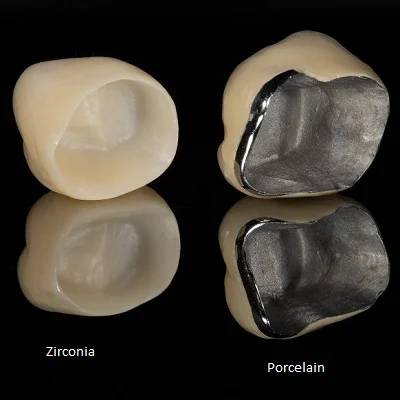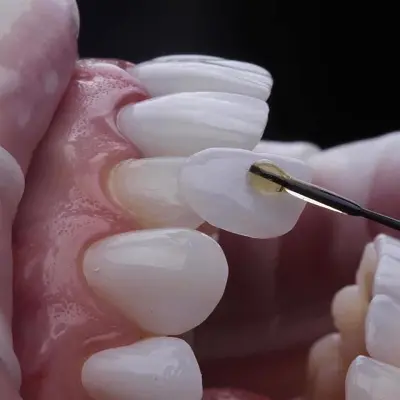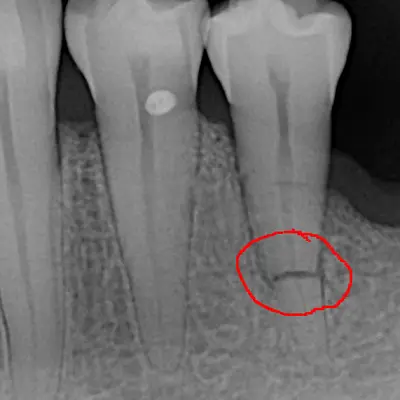
A dental bridge replaces one or more missing teeth by attaching artificial teeth to the natural teeth on either side. It consists of artificial teeth (pontics) that are supported by crowns cemented onto the adjacent teeth (abutments). Together, this creates a “bridge” that fills the gap left by missing teeth.
You may have received a dental crown & bridge if:
- You lost teeth due to decay, injury, or extraction.
- You wanted a fixed replacement instead of removable dentures.
- You had healthy supporting teeth on both sides of the gap.
- You needed to restore proper chewing function.
- Your missing teeth were affecting your smile.
Types of Dental Bridges:
Traditional Bridge |
Cantilever Bridge |
| This is the most common type and uses crowns on the teeth next to the gap.
Lifespan: Typically 10–15 years. |
Anchored on only one side when there is a tooth available on just one side of the gap.
Lifespan: 8–12 years. |
Maryland Bridge |
Implant-Supported Bridge |
| Uses a metal or porcelain framework bonded to the back of the adjacent teeth.
Lifespan: 5–10 years (least durable). |
Anchored to dental implants rather than natural teeth.
Lifespan: 15–20+ years (most durable). |
Warning signs that your dental bridge is failing:
Movement or Looseness
Your bridge may shift slightly when you eat, talk, or touch it with your tongue. This movement feels abnormal compared to how stable it once was. This usually means the cement holding your bridge has weakened or failed.As a result, the bridge is no longer firmly attached to the supporting teeth. This is a serious issue and requires immediate attention.
Pain or Sensitivity
Pain when biting down, sensitivity to hot or cold foods, or constant aching under the bridge area. This pain is new or has gotten worse recently. Decay has likely formed under the crowns on the supporting teeth. Bacteria entered through gaps where cement failed, causing cavities in the anchor teeth.
Visible Damage
Chips, cracks, or breaks in the porcelain. Dark lines at the gum line where the bridge meets the tooth. The bridge looks discolored or stained. Metal showing through porcelain. The bridge material has fractured or degraded. Exposed metal or tooth structure increases the risk of further damage and decay.
Difficulty Chewing
Avoiding certain foods because chewing hurts or feels unstable. Food gets stuck under the bridge constantly. Your bite feels “off” or misaligned. You favor the other side of your mouth when eating. The bridge is no longer functioning properly. Supporting structures are compromised, or the bridge is loose.
Gaps Appearing
Space appears between the bridge and gum tissue. Food consistently gets stuck in this gap. Dark shadow or line visible where the bridge meets the natural tooth. Gum recession has exposed the margin where the bridge connects to the tooth, or the cement has failed, creating an opening.
How long does a dental bridge last?
Average Lifespan:
- Traditional bridges: 10-15 years
- Maryland bridges: 5-10 years
- Implant-supported bridges: 15-20+ years
Factors Affecting Longevity:
Good oral hygiene: Extends bridge life significantly
Regular dental checkups: Catches problems early before major damage
No teeth grinding: Grinding accelerates wear and loosening
Healthy diet: Avoiding excessive hard/sticky foods prevents damage
No smoking: Smoking causes gum disease weakening bridge support
Quality materials: Higher quality porcelain and metal last longer
Expert placement: Proper fit from skilled dentist like Dr. Usama Hayat crucial
Treatment options for failing bridges:
Re-Cementation
If the bridge is intact but loose, Dr. Usama Hayat can re-cement it.
When appropriate: Bridge undamaged, teeth healthy, cement simply failed
Success rate: 70-80% if teeth are healthy
Bridge Repair
Small chips or cracks can be repaired with composite bonding.
When appropriate: Minor damage, structurally sound bridge
Duration: Repairs last 2-5 years typically
Complete Bridge Replacement
Most common solution for significantly failed bridges.
Process:
- Remove old bridge
- Treat any decay or infection
- Prepare teeth (if salvageable)
- Create new bridge
- Cement new bridge
Timeline: 2-3 weeks for fabrication
Dental Implants
If supporting teeth are too damaged, implants replace both bridge and teeth.
Advantages:
- Don’t depend on adjacent teeth
- Last longer (20+ years)
- Preserve jawbone
- Look completely natural
Timeline: 3-6 months complete process
Why Choose Dental Clinic Islamabad for Dental Bridge?
Dr. Usama Hayat at Dental Clinic Islamabad is your best choice because:
- You get expert diagnosis identifying exactly why your bridge is failing through comprehensive examination and digital X-rays
- Your treatment options are explained clearly with honest assessment of whether repair or replacement is better
- You receive same-day consultations for urgent bridge problems without long waiting periods
- Your new bridges are custom-made using premium materials ensuring perfect fit and natural appearance
- You benefit from Dr. Usama Hayat thousands of successful bridge placements with proven long-term results
- Your procedure uses modern anesthesia techniques making treatment completely painless
- You access 3D imaging technology for precise bridge planning ensuring optimal fit
- Your bridge is fabricated in quality labs meeting international standards for durability
- You get detailed care instructions ensuring your new bridge lasts maximum lifespan
FAQS
Is it normal for a bridge to hurt?
No, A properly functioning bridge should not cause pain. Any discomfort may indicate problems like decay, infection, or a loose fit and requires immediate evaluation by Dr. Usama Hayat.
Can a cracked bridge be repaired?
Small chips can be repaired with bonding. Large cracks or fractures usually require complete bridge replacement, as repairs are temporary and often fail quickly.
How urgent is a loose bridge?
Very urgent. Loose bridges can fall out, posing a choking hazard and exposing the supporting teeth to rapid decay.
Is it better to repair or replace a failing bridge?
This depends on the extent of damage and the condition of the supporting teeth. Dr. Usama Hayat evaluates both and recommends the most cost-effective long-term solution.
What if the supporting teeth are too damaged for a new bridge?
Dental implants become necessary if the anchor teeth cannot support a new bridge. While more expensive initially, implants don’t depend on adjacent teeth and last longer.
Can gum disease cause bridge failure?
Yes, Gum disease is a leading cause of bridge failure. It weakens the supporting teeth, causing them to loosen or fail.